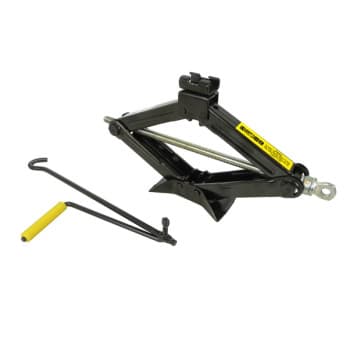

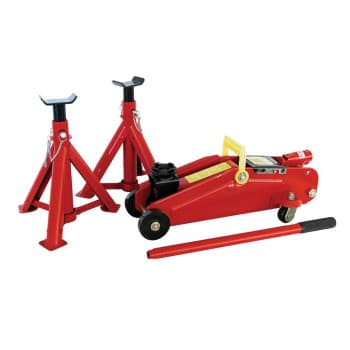


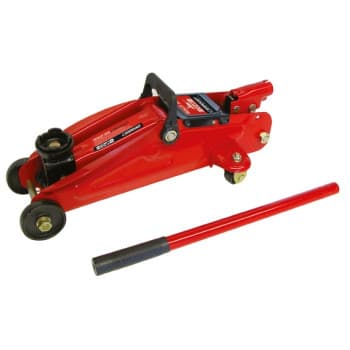

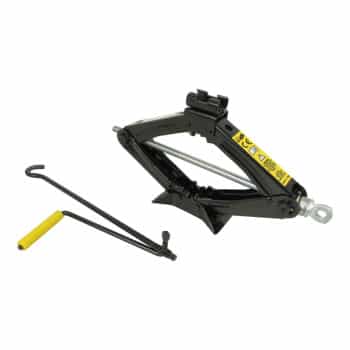






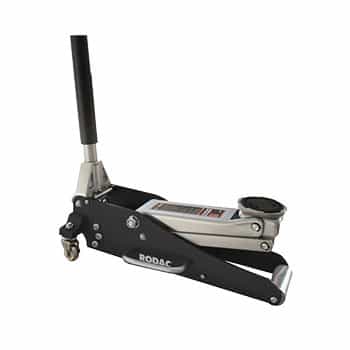
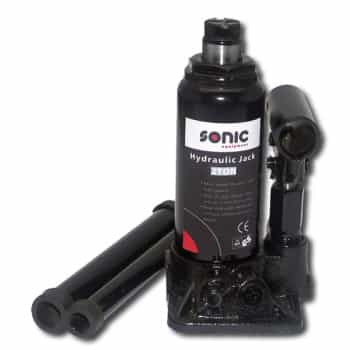


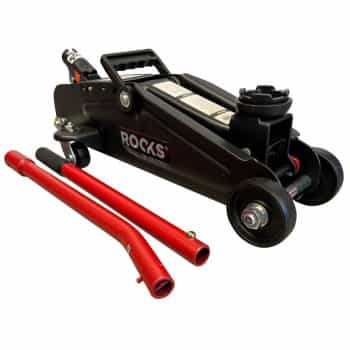

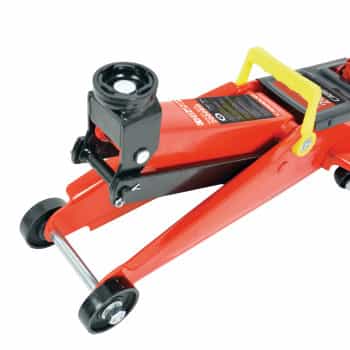

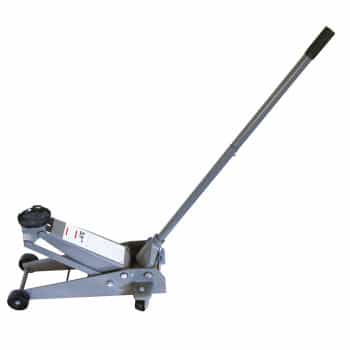
A car jack or trolley jack is a handy tool to lift the car off the ground. Doing jobs on the car such as changing tyres or replacing brake pads and brake discs, jacking up the car is necessary. This is where you use a car jack. However, safety when using a trolley jack or any other kind of car jack is very important. It is important that you purchase a high-quality and robust jack. We advise against saving and buying a cheap car jack. There are different types of car jacks such as; scissor jack, hydraulic trolley jack and bottle jack. We explain these different types below.
Types of car jacks
A scissor jack is a jack that you raise with a swivel arm. Scissor jacks often have a lifting capacity between 1 and 2 ton. A scissor jack is fairly light and therefore more convenient than a hydraulic jack. It’s also easy to carry in the boot of the car. In addition, scissor jacks are also known for safety when jacking up. However, a disadvantage is that these scissor jacks are somewhat more unstable than, for example, a hydraulic trolley jack. Also, jacking up a car still costs quite a bit of power. A scissor jack is often seen as "emergency aid" to quickly change a tyre on the way. For larger jobs, it is wiser to use a hydraulic jack, these are just a bit more sturdy and offer more safety.
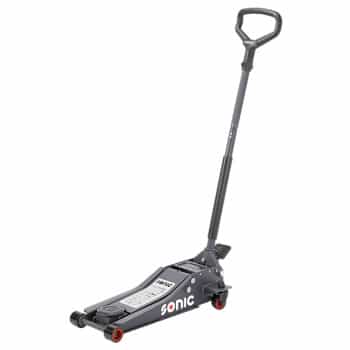
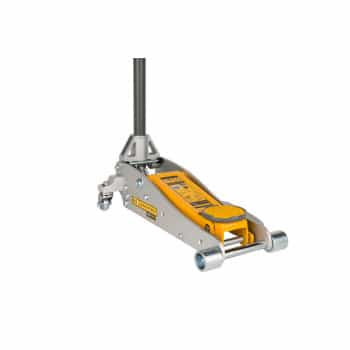
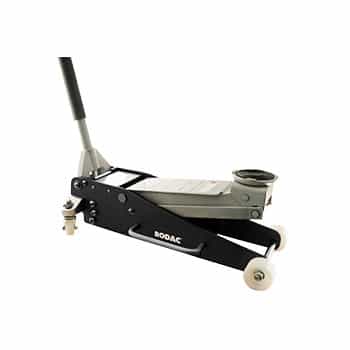
We have just mentioned it a few times, the hydraulic trolley jack. The hydraulic jack is more versatile than, for example, a scissor jack. The lifting capacity of a hydraulic trolley jack is often more than 2 tons. In addition, they are also just a bit stronger and therefore safer than a scissor jack. It also requires less force to lift the car with a hydraulic jack. The car is completely raised within a few pumps. A disadvantage compared to the scissor jack is that a hydraulic jack is a lot heavier and bigger. You won’t be able to carry it in the boot without sacrificing boot space.
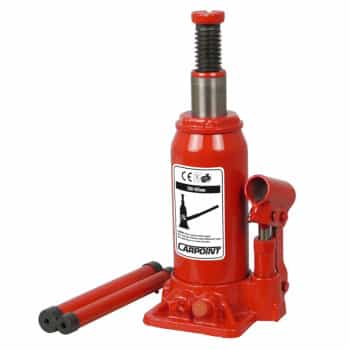
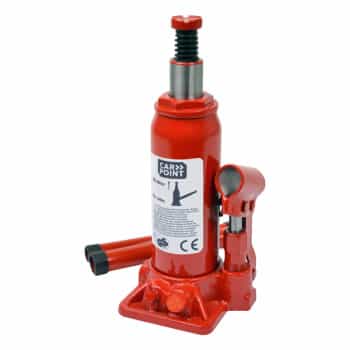
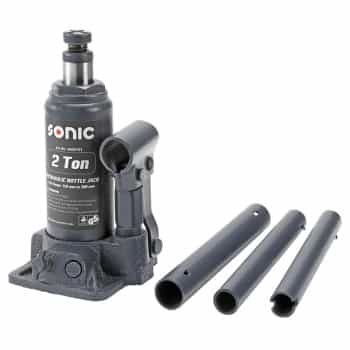
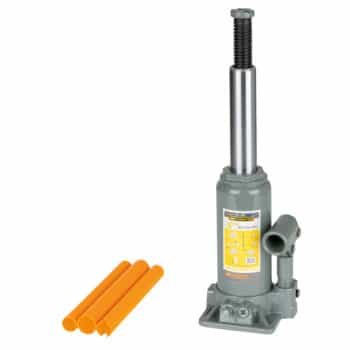
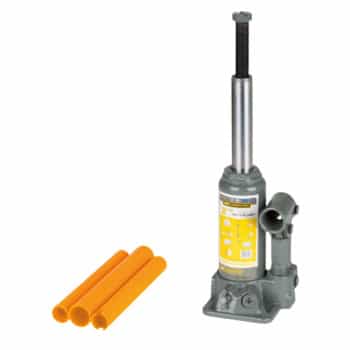
In addition, there is also a bottle jack. A bottle jack is often a hydraulic jack, but without wheels. The lifting capacity is also equal to that of a hydraulic trolley jack, so at least 2 tons. A pot jack, on the other hand, is lighter and more compact than a hydraulic car jack and therefore easier to carry. In addition, they are also very easy to operate. A disadvantage of a pot jack, however, is that thanks to its shape, they can topple somewhat more easily, in contrast to a roll jack. In terms of safety, the bottle jack is therefore slightly less advisable.
What car jack do I need?
Before you purchase a garage jack or car jack, you naturally want to know what you need. There are a few points you can pay attention to. First of all, the weight of your car is important. Every car has a certain weight, but every car jack also has a maximum lifting capacity. So for a lighter car, you need a garage jack with less power than for a heavier car. However, a car jack with a lifting capacity of 2 tonnes is sufficient for most cars. It’s better to have a jack with much more capacity than needed, because it will be safer lifting the lower than specified max lifting weight. Another point to pay attention to is the minimum and maximum height of the car jack. Not every jack fits under all cars. If your car is lowered, you need a low jack. For a high car, it is important that the jack can be high enough to lift the car with the wheels off the ground.
Buy a car jack
Buying a car jack is quick and easy at Winparts. With us, you will find a wide range of car jacks from different types and brands. You can also turn to Winparts for other tools such as a tyre pump, spray lubrication or siphon pumps.