




A frequently asked question that we get is ´what is a CV joint?´. A CV joint, also known as a constant velocity joint or homokinetic, is part of the drive shaft. Its task is to transfer the driving force from the differential to the wheels in a non-straight line. Both the driveshaft and the CV joints wear over time. Not without reason, they are constantly and heavily used while driving. A CV joint can wear extra fast when the driveshaft cover, also known as a CV boot or CV gaiter, is torn or broken. The CV boot is a rubber cover that is placed around the joints, the CV joints and the driveshaft. If the CV boot is broken, grease from the CV joint will be lost faster. If this is the case, then the part can no longer be optimally protected against dust, dirt and moisture and therefore is prone to fail more quickly. But how do you recognise a failing CV joint?
CV joint failure symptoms
Exposure to dirt and moisture is the main cause of CV joint failure. Such exposure will cause joints to corrode, and they become especially vulnerable when the CV boot tears or cracks. You can recognize a broken CV joint by a number of symptoms. The most common symptom is a cracking, clunking or ticking noise when accelerating or taking a sharp turn. To find out if it is actually your CV joint that is failing, you can do a little test. You can start off by driving in a circle on an abandoned parking lot. There is a good chance that you will hear a ticking sound. Next, steer your car into a straight line, the sound should now be gone. Another way is to inspect the part itself. To manually inspect the part, turn the wheel all the way to the left or right. This gives you the ability to have a proper look at the part. Do you see a broken CV boot, dirt and grease? Then you will have to replace the CV joint and de CV boot.
Replacing a CV joint
You can replace a worn CV joint yourself if you have some technical knowledge (intermediate level). Before replacing the car part, we recommend that you check the entire wheel suspension for play or wear. In some cases, there may be more going on. You can then choose to replace the entire driveshaft including CV joints. Before you are able to replace the CV joints, you will first have to remove some parts of your car's suspension. To do this properly, you will first have to jack up the car with a garage jack and support it with axle stands. Once you have jacked up your car and properly placed the axle supports, you can remove the front wheel and loosen the suspension. You also need to remove the brake discs and the ball joint. In some cases, you may have to remove the entire strut. If all goes well, you can now get to the CV joint and replace it.
CV joint replacement cost
How much the replacement of a CV joint costs, differs. The costs depend on, for example, the car make and model. If you replace the part yourself, you only have the costs of the part. If you have the CV joint replaced by your local garage, you also pay for the mechanic. How many hours they spend is difficult to say, but the cost can run up quite high. How easy the constant velocity joint is accessible also differs per car. Don't have the skills to replace the part yourself? Then order the part at Winparts and bring it to the garage to have it replaced. At a garage, you often pay more for the part than buying it online, so this way you?ll save at least some money.
Buying a new CV joint
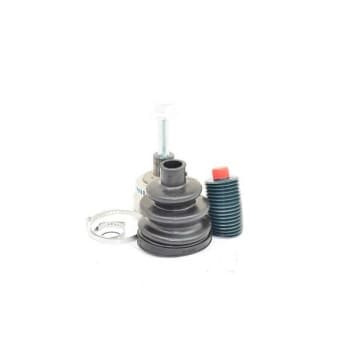
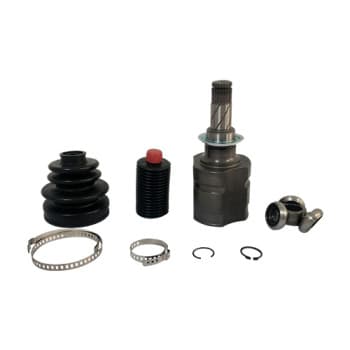
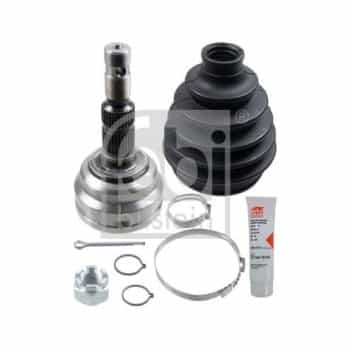
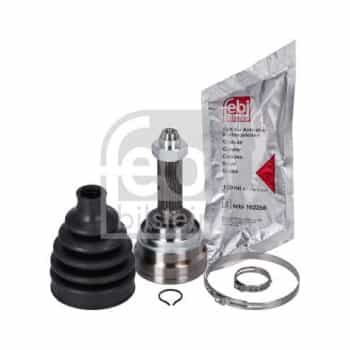
You can buy a CV joint quickly and easily at Winparts. Just enter your number plate or select your car on make, model and type on our website. The suitable products for your car will then be displayed. You can also buy CV-kits at Winparts. Our premium-quality CV joint kits may include stainless bands, a CV boot, circlip, spindle nut, grease, and of course the joint itself. Some of our kits even include dust shields and spacers. Looking for other parts such as wheel bearings, wheel hubs nuts or universal CV boots? Then you are at the right place!