

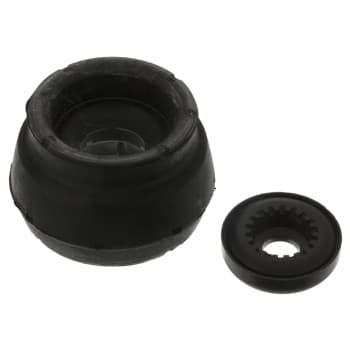

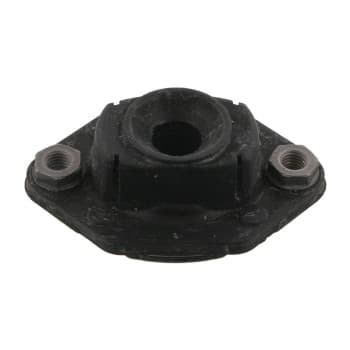
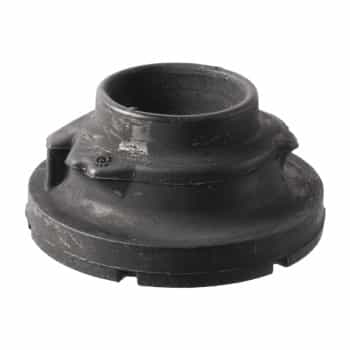

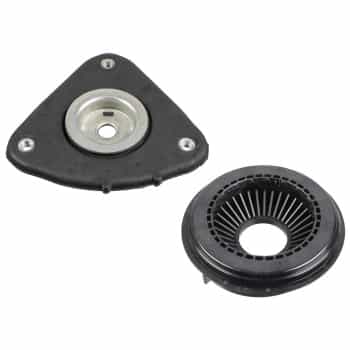


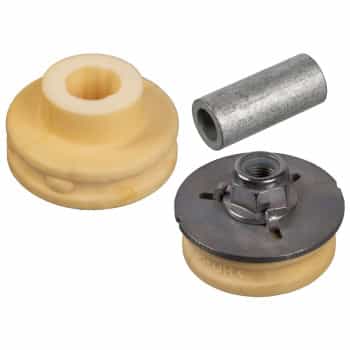
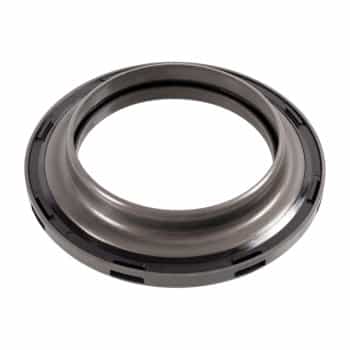
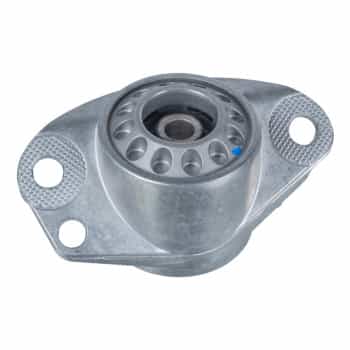


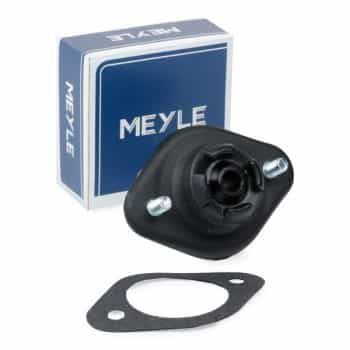
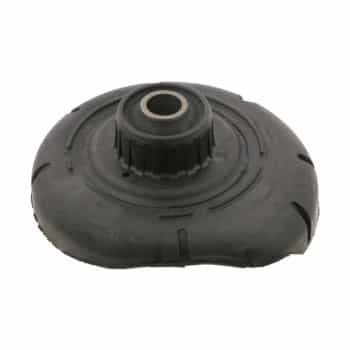
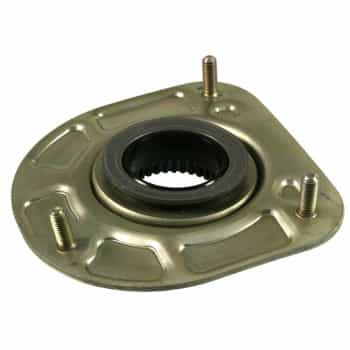
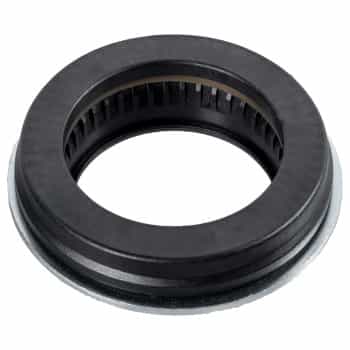
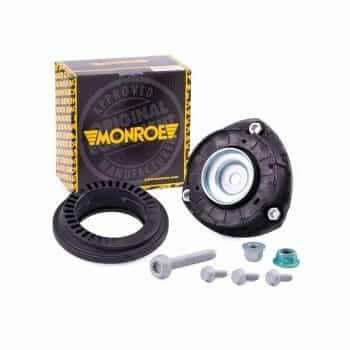

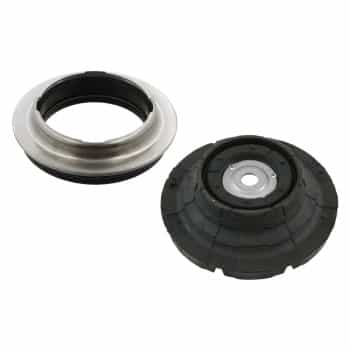
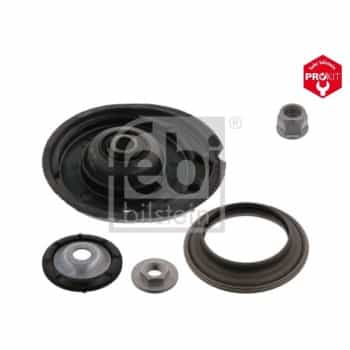
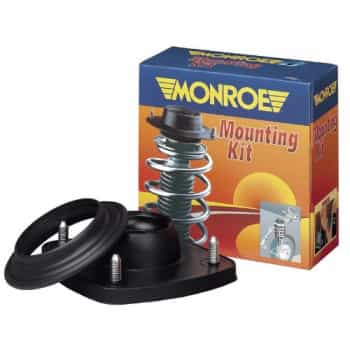

The strut bearing is the connection between the strut and the body of the car. The function of the strut bearing is to drive the front struts of the car, enabling steering. In addition, the strut bearing absorbs shocks and vibrations so that they are not felt in the handlebars while driving. To power the struts and enable steering, the front strut bearings have a built-in roller bearing. The rear struts do not have a built-in roller bearing. The back of the car does not have to steer. Depending on the vehicle and your driving style, a strut bearing will last an average of 75,000 to 100,000 kilometers. It is important to replace the bearings in case of visible wear, but also when installing new shock absorbers. Always replace the strut bearings and shock absorbers per axle to avoid too much difference in wear on both axles. In addition, this will save you a lot of time and effort! In this way you prevent the car from having to return to the bridge in a short time to replace the strut bearings and shock absorbers on the other axle.
Strut bearing broken
Strut bearings have a major influence on the operation of the chassis. If the strut bearings are defective, the braking distance of the car will be much longer. This can create unsafe situations because the car no longer brakes as you are used to. That is why it is important to check the bearings regularly and replace them if necessary. A number of symptoms can indicate broken or worn strut bearings. One symptom is that the car is more difficult to steer and therefore does not stay in its track. This is because the struts are not properly powered. Another symptom of a worn strut bearing is that the car makes a humming or rattling noise on an uneven road surface. This noise is caused by the elasticity of the bearing decreasing over time. The suspension strut will then no longer be properly connected to the body of the car, causing a humming or rattling sound. You can also recognize a worn or broken bearing on the handlebars. Does the car steer heavier, or does it not automatically go to neutral from a bend? Then check whether the bearings are worn or broken.
Replace strut bearing
You can check whether the suspension strut bearing needs to be replaced by placing the car on the bridge. If you can easily move the strut back and forth, the strut bearing is worn. Strut bearings should be replaced every 100,000 kilometers. The life of the bearings are roughly the same as the rest of the car's suspension system. It is therefore important to simultaneously check these parts for wear and replace them if necessary. This way you ensure that the car does not have to be back on the bridge in a short time!
Buy strut bearing
You can easily find the right suspension strut bearings and rubbers for your vehicle with your car model. You can easily enter this on our website. The suitable car parts will then be displayed. Are you looking for other car parts for the chassis? At Winparts you will also find chassis springs and leaf springs, spring caps, tie rod ends, stabilizer rubbers and ball joints.